
The Beauty and the Blood: A Review of Robert Eggers' Nosferatu
Few directors working today bring a sense of dread and atmosphere quite like Robert Eggers, and with Nosferatu, he proves once again that he’s a master of eerie, historical horror. This reimagining of the 1922 silent classic is both reverent and refreshing—a slow, shadow-drenched descent into madness and obsession.
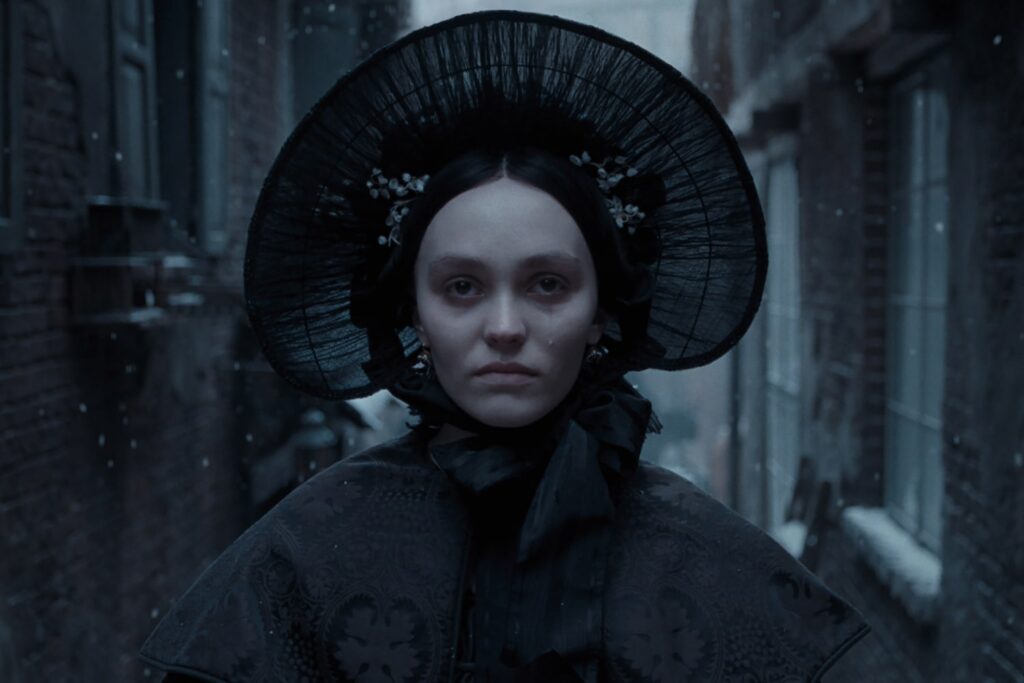
From the first frame, Nosferatu is unmistakably Eggers: every candlelit corridor, every whispered superstition, every decaying chapel is steeped in dread. The film looks and feels like a Gothic painting come to life, and in that regard, it is absolutely stunning.
But the crown jewel of this film is Bill Skarsgård’s unrecognizable transformation into Count Orlok. He doesn’t just play the vampire—he embodies him. Skarsgård’s Orlok is repulsive yet hypnotic, a grotesque figure of ancient hunger with an unsettling elegance. His physicality, his stillness, and the unnatural cadence of his voice create a creature that lingers long after the credits roll. This is not a Dracula of romance, but a true monster—and one of the most terrifying depictions of the vampire in years.
Nicholas Hoult also deserves praise for grounding the film in human fear. His portrayal of Thomas Hutter is full of believable, mounting terror, and he never loses the audience even as the story veers into more surreal and symbolic territory. Hoult’s performance becomes the emotional anchor of the film, a man unraveling under the weight of the unspeakable.
That said, Nosferatu is not without its weaker moments. Lily-Rose Depp, while committed, occasionally slips into a possession-trance mode that feels jarring rather than eerie—moments that pulled me out of the narrative rather than deepening the horror. Especially after numerous scenes of this. I will give praise to Depp for her commitment, however. Similarly, Aaron Taylor-Johnson, usually a reliable screen presence, came off as strangely forced in several scenes. His delivery felt theatrical in a way that clashed with the rest of the film’s tightly wound realism.
Still, those are minor quibbles in a film that delivers such a rich, atmospheric experience. Eggers crafts a world that feels untouched by time, full of rot, longing, and whispered horrors. The cinematography by Jarin Blaschke is exquisite—full of deep shadows and flickering light—and the score creeps under your skin like cold breath on the back of your neck.
Nosferatu is not a film for everyone. It’s slow, strange, and deeply committed to its own tone. But for those willing to sink into its gloomy waters, it offers an unforgettable nightmare, anchored by a monstrous performance from Skarsgård and a terrified, human one from Hoult. This is Gothic horror done right—eerie, emotional, and entirely Eggers. I HIGHLY recommend it!